- About Us
- Our School
- Enrolment
- Faith & Service
- Learning
- Co-Curriculum
- Our Community
- Portal
Saint Ignatius College Geelong

Saint Ignatius College Geelong
Saint Ignatius College Geelong
 Our News // 21 August 2025

Dear Parents & Carers,
College Production – Tickets now available & selling fast!
It is very exciting that the College’s production – “Les Misérables” – will be performed this week. After many months of planning, preparation, and rehearsals, the cast of 87 students, together with the support crew of students, staff, and parents, is ready to entertain us and enjoy the many benefits of participating in such an event. The students have been gaining valuable knowledge, skills, talents, and confidence in various areas.
The performances will be held at the College’s Companions Centre at the following times:
Thursday 28th August –evening show (7.00 pm)
Friday 29th August - evening show (7.00 pm)
Saturday 30th August – matinee show (12.00 pm)
Saturday 30th August – evening show (7.00 pm)
Tickets can be purchased by clicking on the link available on the College website: https://www.ignatius.vic.edu.au
I encourage all members of the school community to support this event by attending one of the performances.
Science Week Sparks Curiosity at the College
Last week, our Science faculty organised Science Week, a celebration of discovery, creativity, and innovation for our students. Themed and engaging activities were held throughout the week, enabling students to explore key scientific concepts in enjoyable and practical ways.
Science Week offered a fantastic chance for students to enhance their understanding of science and its importance in daily life. We thank all staff and students who helped make this week a memorable and enriching experience.
The Catholic Church has a long and rich history of supporting scientific discovery, viewing faith and reason as complementary paths to truth. Many of history’s most significant scientific advancements were made by Catholic clergy, such as Gregor Mendel, the father of genetics, and Georges Lemaître, who first proposed the Big Bang theory. The Church has consistently promoted education and the pursuit of knowledge, establishing universities and preserving scientific texts throughout the centuries. Rather than seeing science and religion as opposing forces, the Catholic tradition encourages the study of the natural world as a way of deepening our understanding of God’s creation.
Fr Chris Middleton SJ, Rector, Xavier College Kew, recently wrote about the contribution of the Church to scientific progress. With his permission, I share his article on this topic. I hope you find it very informative and interesting.
JOURNEYING WITH YOUTH
National Science Week ends today. Whether it be the challenges around the environment, pollution, energy and sustainability, or the ever-growing impact of technology in our lives, science, in its broadest sense, is integral to the world we live in. Science Week, perhaps ironically, comes just after the 80th anniversaries of the dropping of the atomic bomb on Hiroshima and Nagasaki on August 6 and 9 respectively.
In remembering these events we reflect not only on the destructiveness of war but also on the high stakes that the use of science can have. In 1946, Albert Einstein wrote of his fear about the way science could be used to increase our capacity to destroy:“The unleashed power of the atom has changed everything except our modes of thinking and we thus drift toward unparalleled catastrophe”.
The dropping of the A-bomb is a reminder that the progress in knowledge is not a panacea for the human condition, and that the moral and spiritual dimension of the human requires constant attention. Challenges around the environment, pollution, energy and sustainability also throw up immense challenges for us. Social media highlights the significance of technology in our lives, and how it is so tied to our ability to communicate and recreate. The world of AI will also throw up numerous challenges for the workplace and so many other areas of life; challenges that can’t be reduced simply to the scientific or economic imperatives.
It has been my practice to write in conjunction with National Science Week about faith and science (and by extension faith and reason), and to reflect on the contribution of the Church to scientific progress. I do so because for many students, even at a young age, the relationship of faith to science is a real credibility test, and because, to be blunt, there is often invincible ignorance about the legacy of the Church in the scientific field, and much of the secular world blindly assumes that faith and science are opposed.
A defining characteristic of our world is the scientific mindset. We approach our observations and understandings about the world through a scientific lens. Even though the evolution of the scientific mindset can trace many of its origins to figures in the Church, there is little doubt that many see a fundamental conflict between a scientific approach to reality and belief in God. Yet the Franciscan priest Roger Bacon (1220-1292 AD) was a pioneer of the scientific method in the history of science in Europe. In his account of the scientific method, Bacon described a repeating cycle of observation, hypothesis, experimentation and the need for independent verification. He recorded the way he had conducted his experiments in precise detail, perhaps with the idea that others could reproduce and independently test his results.
Many would be surprised that the Church has an Academy of Sciences, let alone what it does. The Academy originated back in 1603 as the Linceorum Academia, was reorganised in 1847 as Pontificia Academia dei Nuovi Lincei, and was reconstituted with its present name by Pope Pius XI in 1936. The work of the Academy comprises six major areas: fundamental science; science and technology of global problems; science for the problems of the developing world; scientific policy; bioethics; and epistemology. Its work is international in scope, and its membership of 80 Pontifical Academicians is worldwide and non-sectarian. About twenty of its members are Nobel laureates. The Academy hosts conferences and develops papers based on their discussions on a wide range of subjects, including robotics and artificial intelligence, sustainable food systems and the development of international standards for organ donation. They also award a prize every other year to a promising scientist under age 45.
One key point of questioning among students, or often an assumption that is made, is that there is a conflict between faith and evolution. As a Catholic and a Jesuit, though no scientist, I see absolutely no necessary contradiction between evolution and my faith. In part this stems from the influence of the Jesuit paleontologist and mystic, Teilhard de Chardin, whose writing opened a connection between the science of evolution and a spirituality that believes God can be found in all things. For me, reading de Chardin on evolution, or watching a nature documentary, or considering the billions of stars that make up billions of galaxies, or pondering the ocean breaking on rocks on a beach, or reading the first two chapters of the biblical Book of Genesis, all point to the wonder of a God as the very author of life, whose creativity ultimately defies understanding, and who bestows the great gift of freedom on the universe.
Evolution, however, is a threat to some Christians because it threatens their basic understanding of their relationship with God, a relationship shaped by a fundamentalist understanding of the Bible as literally God’s Word. Catholics and many other Christians share a more complex understanding of the Bible. We see it as a library of books, with varying literary forms. Thus, the Bible needs to be read in terms of its form, as history, as theology, as poetry, as apocalyptic literature, as wisdom sayings etc. It is to be understood within the tradition of the community for which it was compiled, and we understand God to communicate through our use of the Word in prayer and worship. The Word of God is addressed to thinking beings, and our response to the Word includes our ability to reason.
The Catholic faith is primarily relational in nature, and centres on the heart and the spirit, but it is also a thinking faith. Catholic theology, traditionally, sees no fundamental conflict between faith and reason. St Anselm wrote a millennium ago “that Faith seeks understanding”. Even earlier, St Augustine wrote “I believe, in order to understand; and I understand, the better to believe.” Questioning, philosophical enquiry, searching, these can all be part of our response in faith. We are not called to wipe our minds to be believers, but we give love the primacy, and at times trust in love to carry us when our understanding may fail us.
For me therefore, there is no essential conflict between science and religion, between evolution and faith. There have been times of course when the Church has allowed itself to be fearful of scientific investigation, as happened with Galileo, or, for many Christians, with Darwin. But just as surely the Church has been patron of science through much of its history, and indeed Galileo himself came under its patronage (his major work was dedicated to the Pope). Modern science owes a great deal to the church.
Prejudice and fear go both ways. In our secular curricula there is almost no mention of the debt owed to the Church in the quest for knowing in areas such as science. To take a few examples: Copernicus, the founder of modern astronomy, was a cleric, Gregor Mendel, who laid the foundations for modern genetics was a Benedictine monk, and Roger Boscovich, who devised an atomic theory that was to influence John Dalton (himself a devout Quaker), was a Jesuit scientist. Blaise Pascal, a theologian, has a law in physics and a theorem in mathematics named after him. Fr Georges Lemaitre first proposed the “big bang theory”. Today, Fr Michael Heller writes on relativistic physics and noncommutative geometry.
Or it could be put another way: how many science books describe Louis Pasteur, the pioneering microbiologist, as a devout Catholic, or Georges Lemaitre, the author of the big bang theory, as a priest, or today, Francis Collins, the geneticist and leader of the Human Genome Project, as a committed Christian? Then, and now, many scientists have been able to combine deep faith with great scientific contributions, yet many continue to read only a false narrative of division and confrontation.
Jesuit education too, has a long tradition of involvement in the sciences. For example, three of the main units in measuring electricity, ohms, volts and amps, are named after their discoverers, Georg Ohm, Alessandro Volta and Andre-Marie Ampere, all of whom worked in, or graduated from, Jesuit schools. Jesuit astronomers such as Christopher Clavius have had a major influence in this scientific discipline, and today the Jesuits still look after the Vatican observatories in Rome and at Mount Graham in Arizona. Br Guy Consolmagno SJ, the world’s pre-eminent expert on meteorites and director of the Observatory, stayed with the Xavier Jesuit community recently. Francesco Lana-Terzi SJ has a place in the history of aeronautics, while Angelo Secchi is called “the father of astrophysics”. The diffraction of light was discovered by Francesco Grimaldi SJ. There have always been Jesuit astronomers, physicists, biologists, chemists and geologists.
One of our tasks here at Xavier is to form students who will not automatically accept that to have a living faith and a scientific viewpoint is mutually exclusive. The Catholic tradition, at its best, and Jesuit education within it, have always accorded respect to scientific enquiry specifically, and the intellectual enterprise more widely, as a gift from God.
Best wishes for the next fortnight,
Michael Exton | Principal

As we move into the second half of the year, it’s natural to feel a little weary - assignments are piling up, the winter weather drags on, and the holidays still feel a little too far away. Yet, there is so much happening within our SICG community to look forward to and keep us energised and motivated!
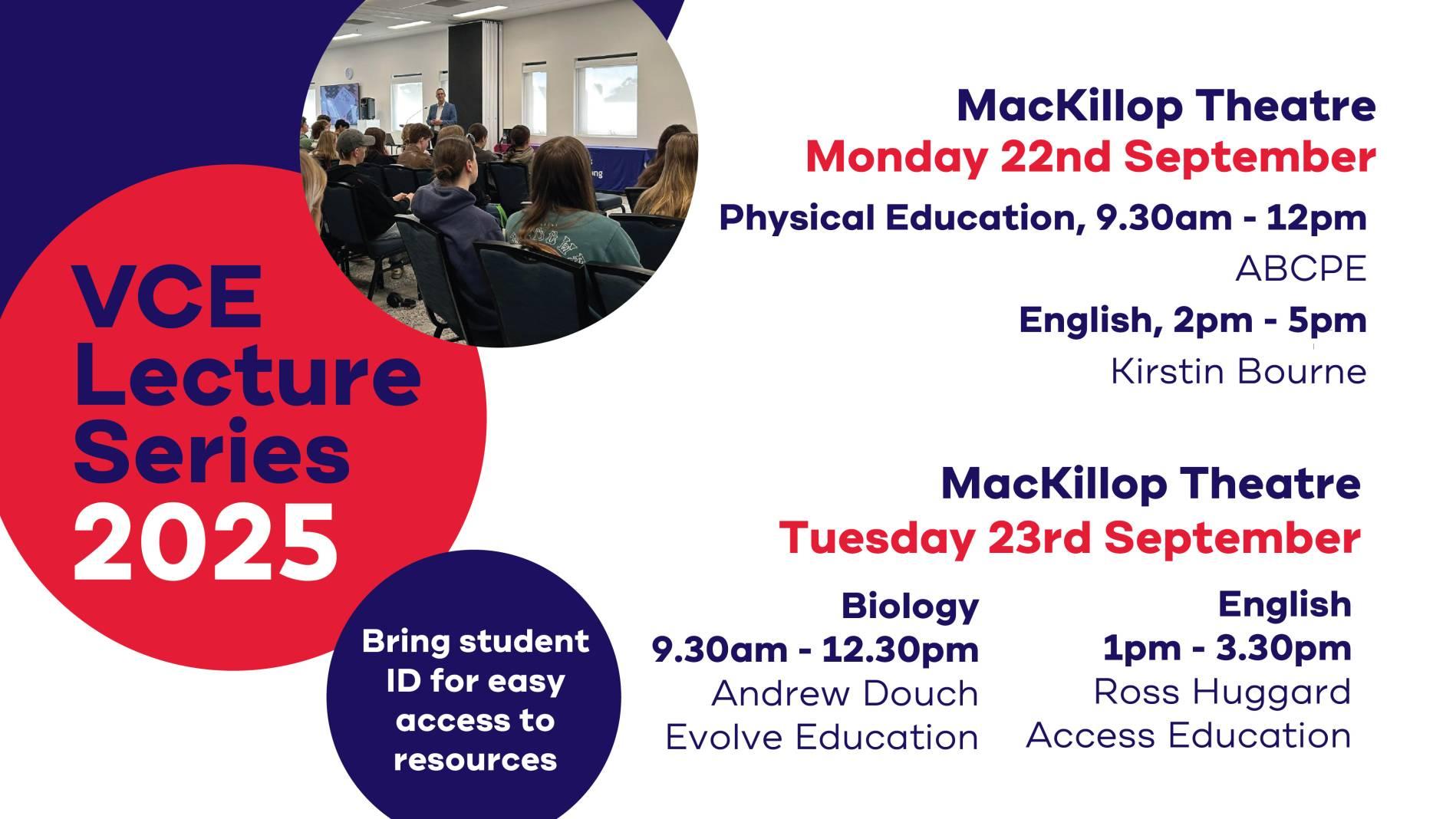
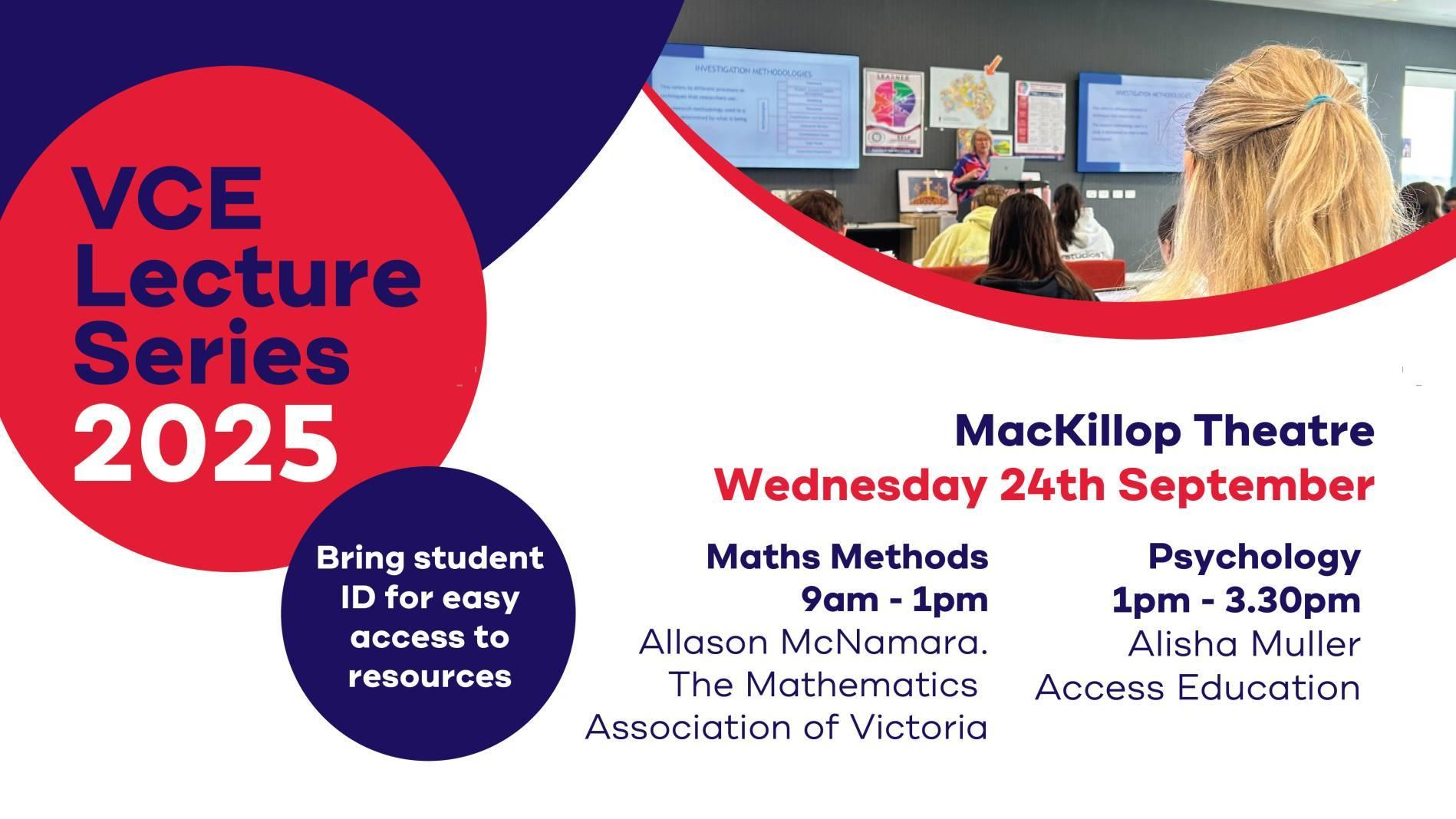
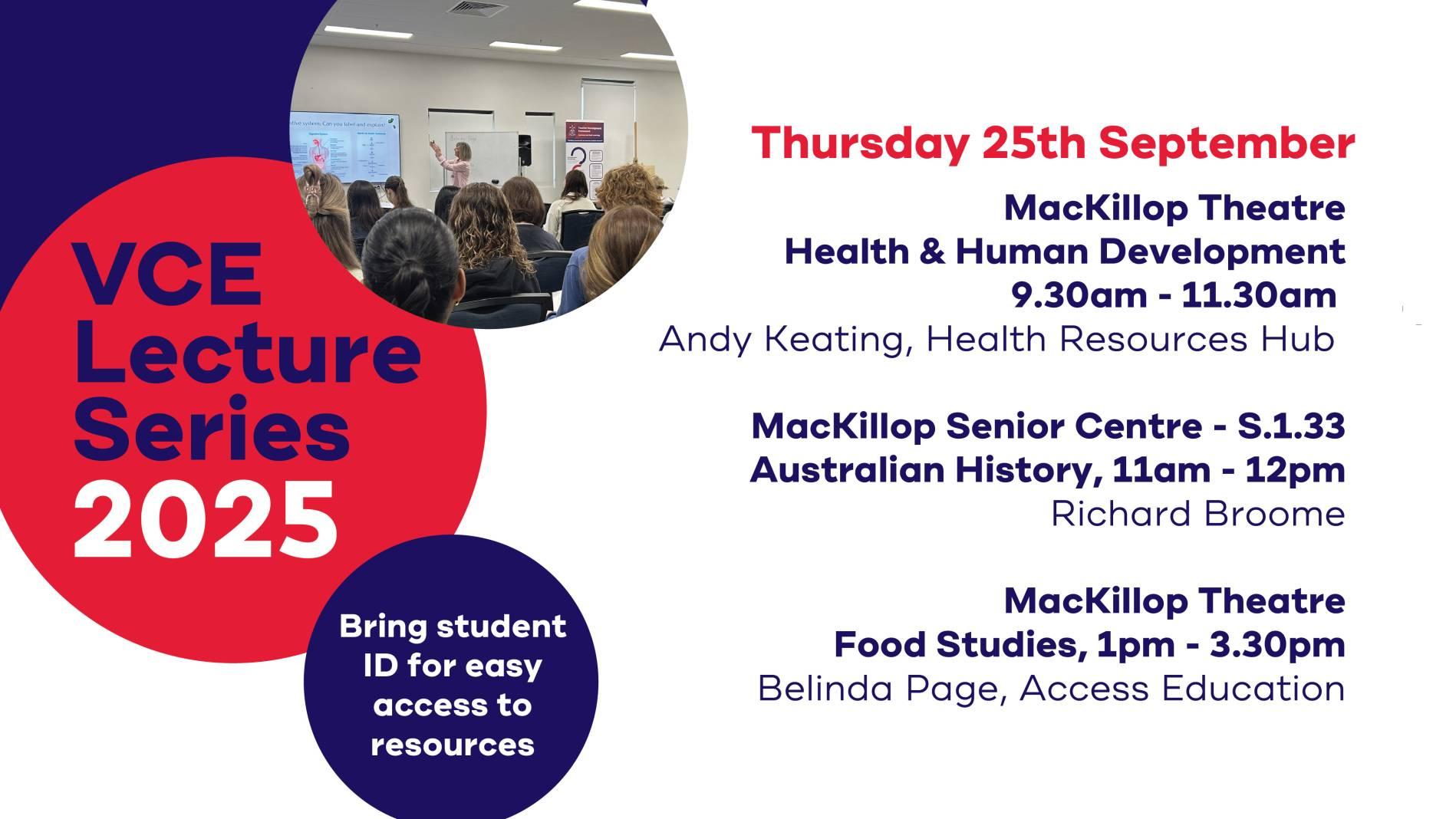
VCE Lecture Series

Our VCE Lecture Series, coming up in the September holidays, is the perfect way to kickstart revision season and collect your thoughts on a whole year of study. It is such an informative and valuable chance for any Unit 3 and 4 student to brush up on their understanding of key topics, gain extra tips from experienced lecturers and feel reassured.
We know too well the importance of events such as this which is why we also encourage you to invite your friends from other schools, too! Everyone is welcome and it works as a pay it forward event, so next year’s cohort can continue to benefit from it, too. Our Year 11 students completing an accelerated subject should also attend!
Click here for the link to the range of lectures available.
ACYF

The Australian Catholic Youth Festival (ACYF) is making its return this December, right here in Melbourne!
Open to students from Year 9 to 25 years old, ACYF is a powerful way to live out your faith, connect with others, and explore spirituality in a vibrant, youth-led space. It's the first festival since pre-COVID, and being hosted locally makes it even more special.
Our College is looking to take a group of interested students to experience this incredible 3 day festival, so keep your eyes out for more details coming out soon, or pop into the Youth Ministry office in the R Block to have a chat with Jarryd and Tara.
Les Misérables

After months of hard work and dedication, our talented students and staff are proud to present this year’s production of Les Misérables, this week!
Held in our very own Companions Centre, this promises to be a powerful and moving performance that showcases the incredible efforts of our school community. The cast, crew, and creative team have poured heart and soul into this show – and it’s already generating a lot of buzz.
Tickets are selling fast, so make sure you book soon to avoid missing out! Purchase tickets here.

🎭 Exciting news! There’s only days to go until our school production of Les Misérables! Tickets are on sale now – don’t miss this incredible opportunity to see the amazing talent of our students in one of the world’s most beloved musicals. Make sure to grab your tickets early – they’re sure to sell fast!
📸 Check out some rehearsal photos below for a sneak peek of the magic in the making!

At Saint Ignatius College Geelong, our Professional Learning program is shaped by both individual staff needs and the College Improvement Plan priorities, ensuring we continue to pursue the MACS Vision for Instruction and the Vision for Engagement. This focus not only builds teacher expertise but also strengthens student achievement and wellbeing by cultivating a thriving professional culture across our community.
Many of our teachers have shown great courage and professional commitment by embracing a new way of working together this year, particularly across the Years 7–8 teaching teams. A significant number of teachers and leaders have engaged in Instructional Coaching which involves dedicating time to observing one another, offering targeted feedback, refining practice, trialling new strategies, and, more recently, participating in low-stakes drop-ins. Already, we are seeing the immediate benefits in stronger collegial relationships and the sharing of effective practice. Importantly, the long-term impact will be even greater, as this work continues to build a culture of collective teacher expertise that enhances student learning and achievement across the College for years to come.
Alongside instructional coaching, many staff have been busily engaged in their chosen focus areas through the Professional Learning Cycle (PLC), each aligned with key College priorities: The Science of Learning, Literacy Across the Curriculum, Feedback for Learning, Behaviour Curriculum, Wellbeing (including Respectful Relationships), and Ignatian Formation. The PLC framework provides teachers with the opportunity to inquire into, trial, and embed practices that make the greatest difference for student learning and wellbeing. This important work will culminate in our end-of-year staff SHOWCace (Celebrate – Acknowledge – Collaborate – Engage), where colleagues will come together to share insights, reflect on growth, and celebrate their professional learning journeys.
We are also committed to fostering the skills, reflective practice, and growth of our leaders to create the strongest possible environment for thriving teams here at Saint Ignatius College Geelong. Throughout 2025, Middle Leaders have continued one-to-one coaching with Dr Bern Nichols, while a large group of aspiring and current leaders have also engaged in fortnightly Dare to Lead workshops, reflecting on Brené Brown’s influential book. This reflective and inspiring work complements the practical leadership coaching already embedded at the College and offers an additional opportunity for shared, collegiate learning. In addition, a number of staff were fortunate to attend the VCSSDPA Regional Women in Leadership Conference, hearing from Professor Elizabeth Labone (CEO of VCEA) and participating in a full-day session with Tracey Ezard on ‘Ferocious Warmth’ leadership. These experiences are helping shape the next generation of leaders in our College.
Our professional growth has been further enriched through opt-in, staff-led Thursday afternoon sessions and a wide range of individual and group external professional learning opportunities, including many aligned with the MACS Flourishing Learners vision. In September, several staff will attend the MACS Flourishing Learners State Conference, featuring keynote presentations from internationally recognised speakers such as Professor Dylan Wiliam, Tom Sherrington, Kristen Douglas, Emina McLean, Brother David Hall, Bron Ryrie Jones, Jamie Clark, and Dr Jordana Hunter. We look forward to bringing this learning back to continue strengthening our work in College priority areas, including student connection and belonging, literacy, explicit teaching, instructional coaching, and curriculum development.
As we continue to invest in the growth of our staff and leaders, we strengthen the foundation for a thriving, connected, and high-performing College community. By combining reflective practice, practical coaching, and engagement with leading research, we are ensuring that our students experience learning that is informed, intentional, and inspiring. Together, we look forward to carrying this work into 2026 and beyond, fostering a culture of excellence, collaboration, and belonging for all.
Jemma Morris,
Director of Teacher Development

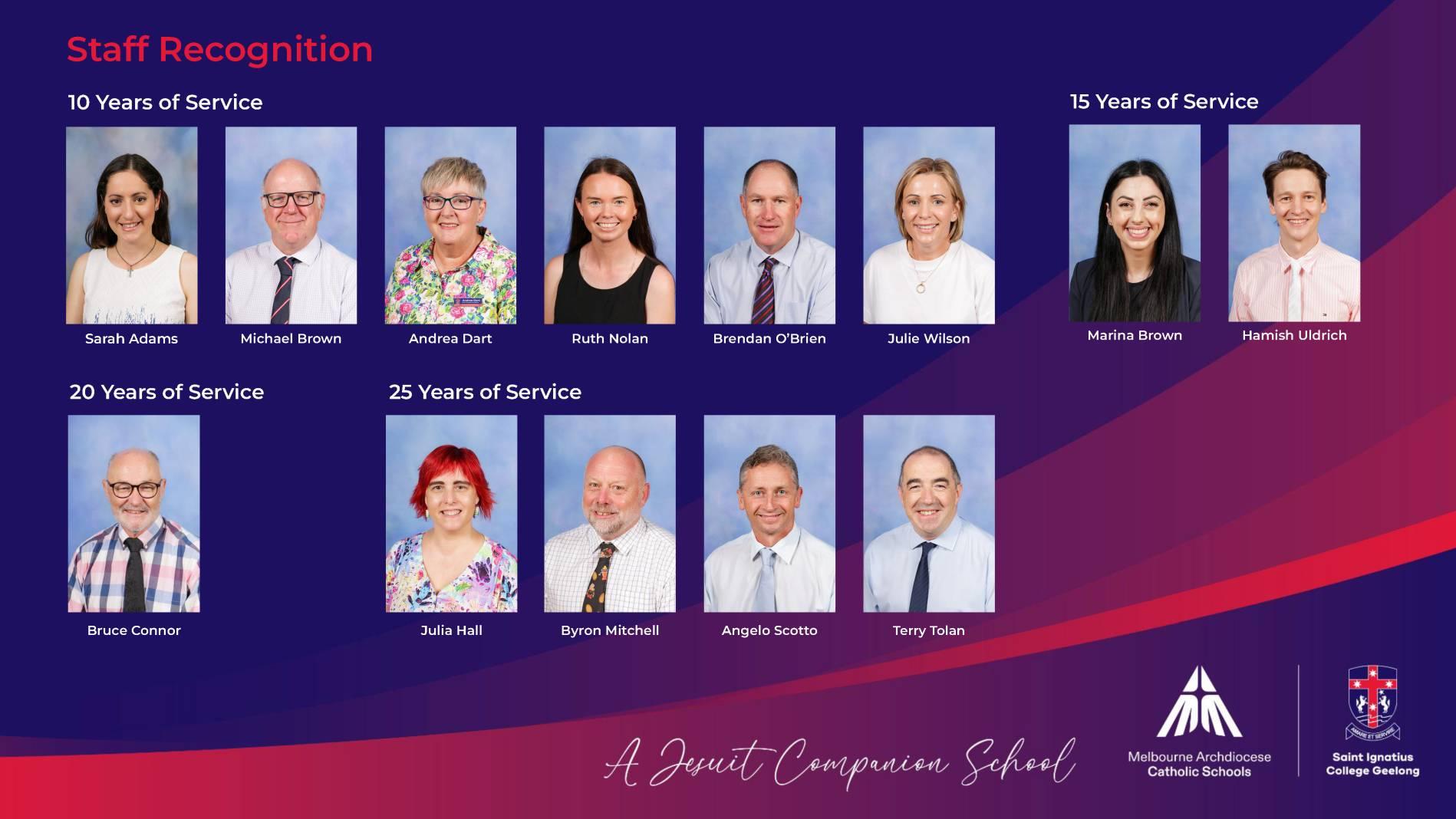
Each year Saint Ignatius College staff, and Old Companions (former staff) enjoy an afternoon tea together on the eve of the Feast Day of our patron saint, St Ignatius of Loyola, before the 'Recognition of Staff Service Presentation.' The afternoon celebrates the key Ignatian theme of servant leadership, by acknowledging milestone years for long serving staff.
The Saint Ignatius College Geelong Community celebrated the following staff and their contribution to the 'build' of the College;

Notification of Absence – Friendly Reminder
To help us keep accurate records and support your child’s learning, we kindly ask that all absences are notified directly to College Reception if your child will be away for one day or more.
Please do not contact teaching staff directly about absences.
You can let us know in any of the following ways:
XUNO (preferred method)
College Reception Phone: 5251 1136 then press 1
Email: office@ignatius.vic.edu.au
When notifying Reception, please include:
Student’s full name
Class and year level
Reason for absence
Expected duration of absence
Thank you for your support in helping us streamline communication and ensure we can care for and support every student effectively.

Noone Uniform Shop will be closed Fridays until the beginning of Term 4.
Open Monday & Wednesday 12:30pm - 4:00pm

SICG Students do not pay to attend the series. Subject teachers will mark a roll in the lead up to the event.